
*******
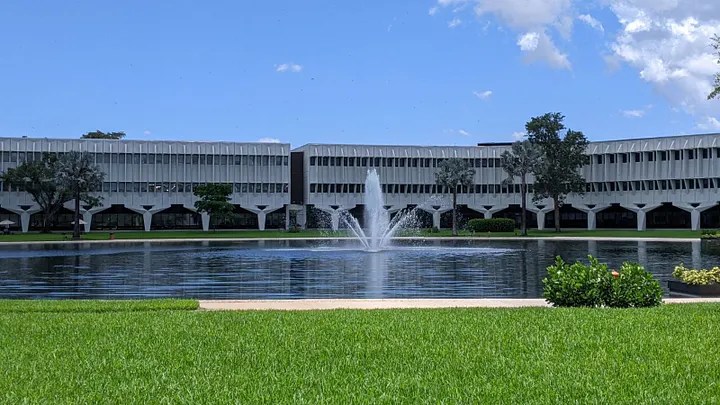
In a 2023 article in Forbes magazine, Jeffrey Steele notes that many real estate firms have hired art curators to decorate the halls and common spaces of their office buildings. Some real estate developers, like CP Group, headquartered in Boca Raton Florida, know that artworks offer a variety of benefits to business and their employees. As Steel indicates, CP Group recognizes that art can inspire creativity and innovation.
But artworks can do even more than that; art contributes to a greater sense of wellbeing and can even be a tool that helps with personal growth.
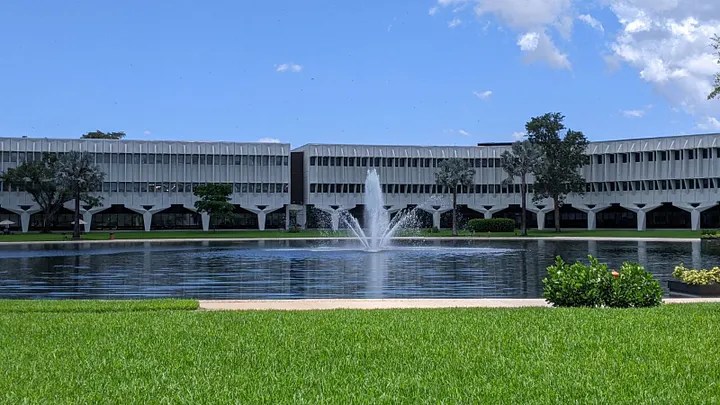
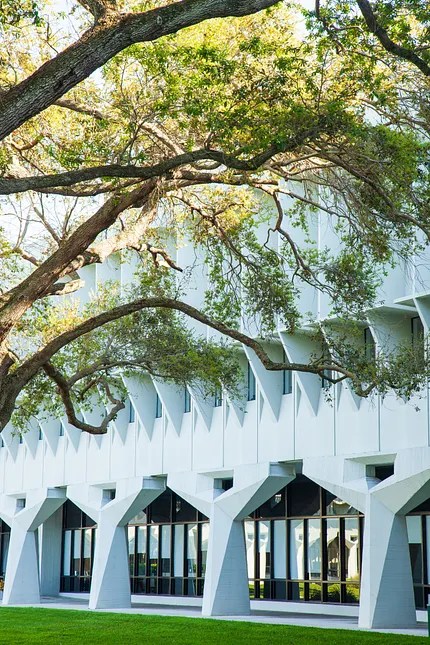
CP Group has renovated and transformed a campus of office buildings in Boca Raton, now known as “BRiC” — the Boca Raton Innovation Campus (Steele, 2023). Inside this 1.7 million square-foot office park, CP Group has been working to fill the corridors with works of art. Virginia Tobeason, the art curator for CP Group, has organized a project for the company called “Art on BRiC Walls” — a project to create a continuous walking art exhibit throughout the buildings. Tobeason has partnered with many local organizations which have provided art for the exhibit.
“We showcase local talent sources from our vibrant arts communities,” Tobeason says. “Through collaborations with area museums, schools, colleges and art organizations, we cultivate a creative atmosphere that supports our community, and energizes the workplace for our tenants and their visitors” (as cited in Steele, 2023).
Tobeason and CP Group have already partnered with Lynn University, Florida Atlantic University, the Boca Raton Museum of Art, and the Palm Beach County Watercolor Society, among many other organizations, which have provided artworks for the walking art exhibit.
Psychologists and philosophers have discussed the ways that artworks benefit their audiences. Arguably, the artworks at BRiC provide numerous advantages for the businesses and employees that work there. The rest of this article will focus on what psychologists and philosophers have written about art. How does their work indicate that art can benefit business?
Psychology and Art: Productivity, Inspiration, Creativity
Instead of broadly summarizing psychological studies’ conclusions in support of the value of art, it is worth considering several specific studies in detail.
Studies in psychology indicate that attractive office spaces — including those with artwork — can increase productivity and lead to a greater sense of wellbeing. Craig Knight and S. Alexander Haslam (2010) performed a study in which they separated office workers into two groups. One group was asked to wait for five minutes in an office that included no plants or artwork on the walls. Later, the second group was asked to wait in the same office, but it had since been decorated with potted plants and photographic pictures (pp. 161 & 164). Individuals from both groups were then asked to perform two simple tasks, the first involving sorting memoranda in chronological order, and the second involving counting every lowercase letter “b” that appeared on a page of a magazine article (ibid., pp. 161 & 164). The office workers also filled out a survey, ranking how “at ease” they felt during the experiment, how comfortable they felt in the room, and how much they enjoyed the tasks they were asked to perform.
The researchers found that the office workers in the decorated office performed both tasks more quickly, without any significant difference in the number of errors they made (Knight & Haslam, 2010, p. 165). Researchers also found that the workers in the decorated office felt more at ease, experienced greater comfort, and enjoyed their tasks more.
Perhaps — arguably — artwork can help employees not only to be more productive, but also to feel more comfortable and enjoy their work more.
Even more strikingly, Donghwy An and Nara Youn (2018) performed a study that implies that art can also inspire greater creativity — and perhaps innovation — in business contexts.
The researchers divided business school undergraduates into two groups (2018, p. 471). Individuals in one group were asked to look through prints of artworks by Vincent van Gogh for three minutes. Individuals in the other group were instead asked to look through non-art photographs of objects and landscapes similar to those depicted in van Gogh’s paintings (ibid., p. 472). Afterward, participants in each group brainstormed “design ideas for a new computer keyboard” for three minutes (ibid.). The researchers found that the average individual who had viewed van Gogh’s artworks developed more ideas for a new keyboard and also developed more original ideas — more ideas that were different from those of other participants (ibid.).
Arguably, focusing on artworks can — at least for a short time after viewing — inspire individuals to be more creative in some of the tasks they would need to perform for a business. Perhaps beholding artworks can also lead to greater creativity and innovation when developing technology as well.
Judith Burton, Robert Horowitz, and Hal Abeles organized a study comparing lower-school students who had received substantial arts-education with students who had received little arts education (1999, p. 38; 2000, p. 239). They found that the high-arts students tended to score higher on a test meant to assess creativity (1999, pp. 37–38; 2000, p. 239). More interestingly, when the researchers interviewed math and science teachers, those teachers often reported that the high-arts students often perform particularly well on certain tasks in their classes — on some of the tasks in their classes that require creative thinking (1999, pp. 36, 38, & 41–42; 2000, pp. 241, 246–247). Arguably, art can inspire creativity even for those who focus on math and science.
Perhaps tasks involved in art, math, and science all contribute to, and make use of, some of the same “higher order cognitive capacities” (Burton et. al., 2000, p. 253). Perhaps the skills of a technologist overlap with the skills of an artist.
If so, then there would be even greater reason to think that viewing and appreciating artworks might help foster greater technological innovation.
Philosophy and Art: Overcoming Obstacles
The philosopher John Dewey observes that every experience we have changes us and influences how we experience the world in the future (2008A, p. 18; cf. Jackson, 1998, p. 33). Thus, too, if we routinely experience artworks, those experiences change us and affect everything else we do (cf. Jackson, 1998, p. 33).
Suppose the offices where we work have artworks on the walls, and we routinely look at them. Doing so will inevitably have some effect on us, even if only in subtle ways of which we are unaware. So too, these artworks might subtly affect how we do our jobs. Perhaps viewing artworks can help us develop more innovative technologies or more creative business ideas.
John Dewey writes that humans have the power to grow — intellectually, physically, and morally. He says that the power to grow “is essentially the ability to learn from experience; the power to retain from one experience something which is of avail in coping with the difficulties of a later situation” (1916, p. 44). Dewey implies that viewing artwork can sometimes lead to personal growth like this (cf. Stroud, 2014, 35; Jackson, 1998, p. 47; Leddy & Puolakka, 2023). Sometimes — Dewey implies — observing artworks changes us in ways that help us to better address the challenges and obstacles that prevent us from moving forward.
How can viewing art lead to growth?
Dewey implies that many people are not as observant of the world as they could be. They do not always pay careful and appreciative attention to the unique qualities of everything around them (cf. Jackson, 1998, pp. 26–27). How do the various objects around us, and the people we encounter, relate to us? What do they mean to us, and how do our past experiences help us to better understand them (cf. Dewey, 2008, p. 109)?
Consider a person who moves to a new city with mountains nearby. The person might first pay attention to the mountains and appreciate them, but eventually they will likely fade into the background. They’re still there, but the person no longer attends to them. Dewey writes that “familiarity induces indifference” and “prejudice blinds us” (2008, p. 110).
But, Dewey writes, engaging with artworks can help us become more attentive to the unique qualities of everything around us. Beholding good art, which inspires us to creativity, can help us to look at the world around us with fresh eyes.
Dewey writes: “Art throws off the covers that hide the expressiveness of experienced things; it quickens us from the slackness of routine and enables us to forget ourselves by finding ourselves in the delight of experiencing the world about us in its varied qualities and forms” (2008, p. 110; cf. Jackson, 1998, p. 27).
In much the same way, many people who face challenging tasks at their jobs — even in business or technology — often overlook possible approaches to facing those challenges. There might be better ways to face their challenges, but they don’t recognize them. Habit, expectations, and prejudices blind them. Reflecting on the work of Dewey, we might think that reflecting on artworks might help individuals to discover new, creative approaches even to facing challenges in business or in the development of new technology.

The Boca Raton Innovation Campus (BRiC): The Unity of Art and Technology
In his 2023 Forbes article, Jeffrey Steele quotes the art curator that CP Group hired, Virginia Tobeason: “It has been a goal of CP Group and specifically the Boca Raton Innovation Campus to integrate art into the ecosystem of our buildings.”
CP Group is filling the halls of the Boca Raton Innovation Campus (BRiC) with art, which it believes can not only improve employees’ quality of life, but also inspire creativity and technological innovation. As noted, the work of many philosophers and psychologists supports this belief.
Angelo Bianco, a managing partner for CP Group, has spoken about the value of art. He acknowledged the power that art has to inspire those who work in business or pursue the development of new technology. Speaking in front of a small audience, he said that CP Group focuses “on something that is near and dear to my heart, and I know to yours, and that is art and technology.” He added: “We believe that the confluence of these two ideas create the most beautiful projects” (BRiC, 2020).
The development of art and the development of technology involve overlapping “higher order cognitive capacities” (Burton et. al., 2000, p. 253). And if we routinely look at and appreciate art, doing so might improve the quality of our lives, the quality of our work, and the quality of our innovations in technology and business.
At the end of his brief talk, Bianco quoted Albert Einstein: “After a certain high level of technical skill is achieved, science and art tend to coalesce in aesthetics, plasticity, and form. The greatest scientists are always artists as well” (as quoted in BRiC, 2020; Earnshaw, 2023, p. 100).

FINISHED
I am the author of the book Theater to Change the World: Shia LaBeouf and the Slauson Rec Company, available on Amazon here.

