*******
Michel Foucault, a famous historian of ideas, lamented that our society views art as “something which is specialized or done by experts who are artists” (1997, p. 261).
Why couldn’t we all be artists, even if we have no specialization and couldn’t be considered experts? Every human can be an artist. And not only that, but humans can make their lives, themselves, works of art.
“Why couldn’t everyone’s life become a work of art? Why should the lamp or the house be an art object but not our life?” (Foucault, 1997, p. 261).
If you want to have a beautiful life – a life that is a work of art – there are things you just won’t do. You won’t cheat on your spouse, or treat others badly for petty reasons, or be too morally bad (cf. ibid., p. 266). You must also have a high degree of self-control; there are no accidental artworks. You must live deliberately.
The way you behave on a daily basis matters. The food you eat matters. How you talk matters. The way you dress matters. It’s all a matter of how you choose to express yourself, to others and to yourself. What kind of work of art will your life be?
The clothes you wear matter to your life as a work of art.
Foucault says that one of the groups that treated their lives as works of art were the dandies of the nineteenth century (1997, p. 271). And Thomas Carlyle, in his satirical work Sartor Retartus, declares that “A Dandy is a Clothes-wearing Man, a Man whose trade, office and existence consists in the wearing of Clothes. Every faculty of his soul, spirit, purse and person is heroically consecrated to this one object, the wearing of Clothes wisely and well” (1831, chapter X).
Obviously, this is meant humorously, but the underlying idea is still interesting. We can treat choosing what clothes we wear – how we present ourselves – as part of our endeavors to fashion our lives as works of art. If we want to reinvent ourselves, and make our lives into art, one step (of many) might be to change how we dress and to choose our clothing deliberately. Foucault notes that, for Baudelaire, the modern man or woman who is capable of true self-invention just is the dandy (1997, p. 311). Those who deliberately invent themselves, and make their lives art, might sometimes be Clothes-wearing Men and Women, who deliberately choose what to wear.
David Novitz maintains: “The ways in which you present yourself to me, the ways in which you speak about yourself and relate incidents of your life, the way you dress and wear your hair” can show as much imaginative effort and skill “as an artist lavishes on a painting or a poem” (1992, p, 59). Novitz indicates that since the the creativity and artistry we put into choosing our clothing, hairstyle, speech, and behavior can be just as significant as that of a traditional artist, “the rigid distinction we like to draw between art and life becomes somewhat less stable” (ibid., p. 59). We can all be artists in our everyday lives!
When we deliberately pick what we wear, and pick with an artistic sensibility, we need not only change how other people view us. We can also have an affect on how we perceive ourselves and how we feel internally. When people think about clothes, they often think about how they will appear to other people, externally. But, as the philosopher Richard Shusterman notes, the clothes you wear can also influence your inner experience – your experience of yourself (2017, pp. 103-104). How you look can affect how you feel, and what you choose to wear can affect how you perceive yourself and think about who you are.
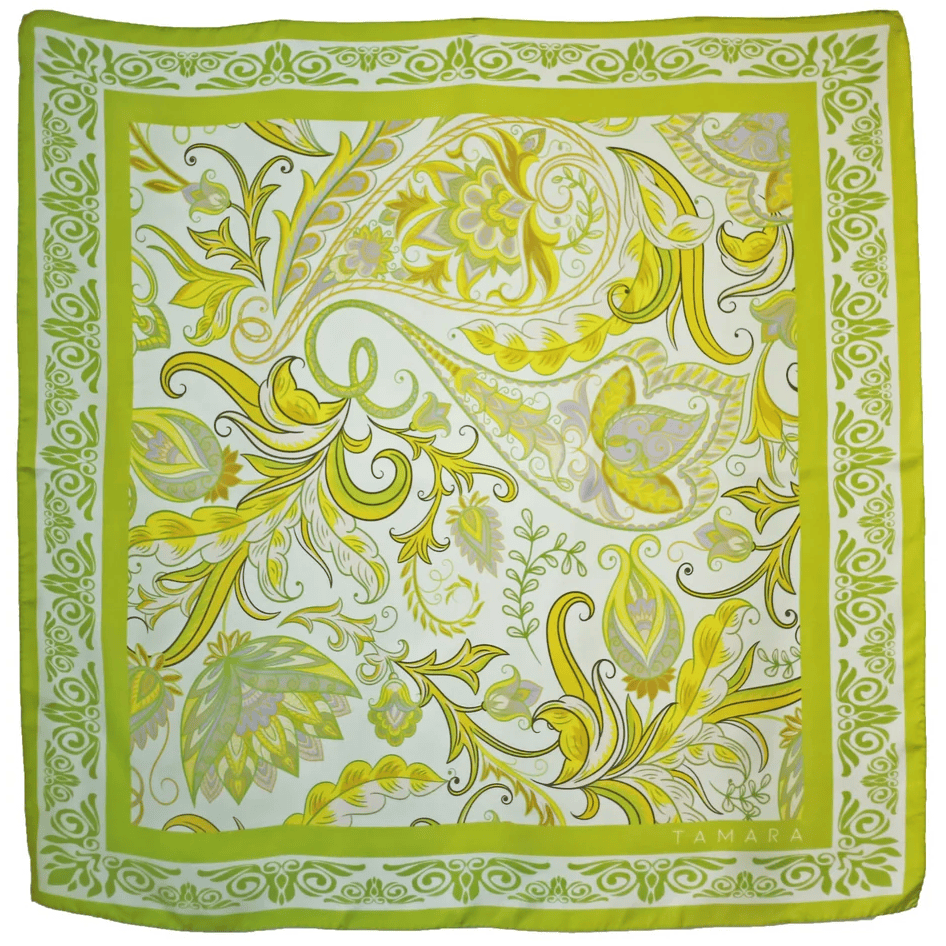
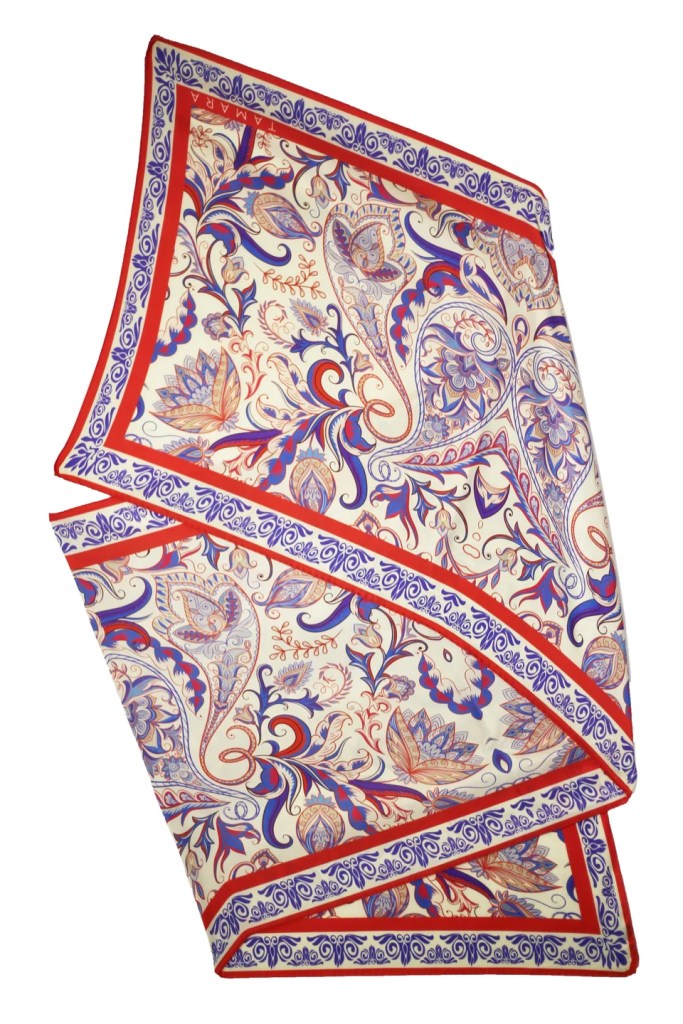
This blog post was inspired by learning that one of my former students had started a company, TAMARA, that makes excellent Italian silk scarves. When she described her inspiration for starting the company, my former student wrote about a scarf that her grandmother passed down to her. Her grandmother was strong and resilient, the scarf became a symbol of her strength and resilience, and wearing it made my former student, herself, feel empowered and confident.
It struck me that, perhaps, the choice to wear a beautiful silk scarf might be an act of self-invention – one of the many, many acts that, taken together, would transform a life into a work of art. This, in turn, led me to think about Foucault’s reflections, and those of Carlyle, Novitz and Shusterman, in a brand new light – a light that I wouldn’t have considered if it hadn’t been for those reflections on a silk scarf.
REFERENCES
Carlyle, T. (1831). Sartor Restartus: The Life and Opinions of Herr Teufelsdrockh. Project Gutenberg. https://www.gutenberg.org/files/1051/1051-h/1051-h.htm
Foucault, M. (1997). Essential Works of Foucault 1954 – 1984: Vol. I: Ethics: Subjectivity and Truth (R. Hurley & Others, Trans.). The New Press.
Novitz, D. (1992). The Boundaries of Art. Temple University Press.
Shusterman, R. (2017). Fits of Fashion: The Somaesthetics of Style. In G. Matteucci & S. Marino (Eds.), Philosophical Perspectives on Fashion (pp. 91-106). Bloomsbury.

