*******
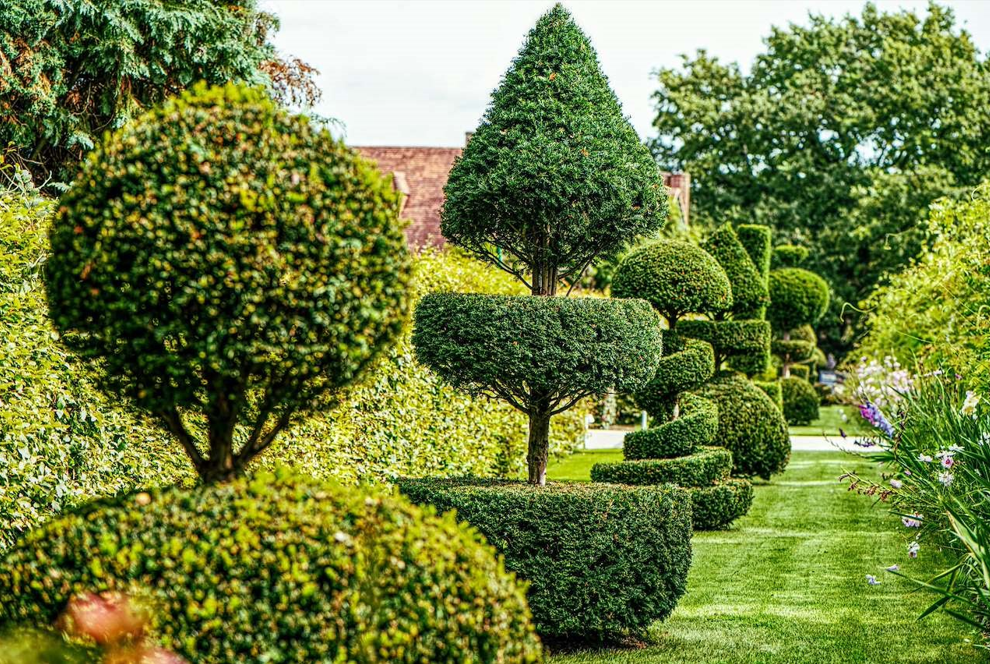
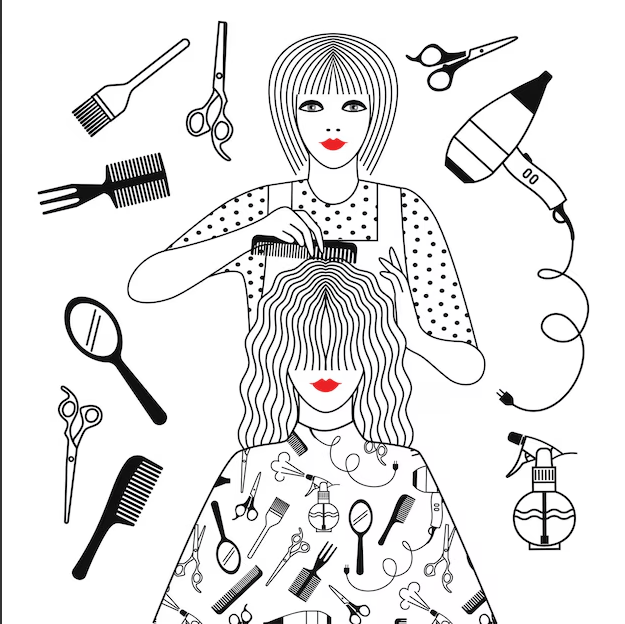
The craft of making topiary is similar to the craft of styling and cutting hair.
Topiary is the practice or art of trimming and pruning trees and bushes into ornamental shapes (Brook & Brady, 2003, p. 127). Much like topiary involves trimming trees, hair stylists often trim hair. Both the topiary artist and the hair stylist are working with living subjects, and both try to make their subjects look good.
The philosophers Isis Brook and Emily Brady suggest that, to appreciate topiary, we must experience “the tree as a living thing” and experience “the artifice which has shaped it” (2003, p. 127). We appreciate that the tree is alive, and also appreciate the skill, creativity and work of those who used artifice to shape the living tree. The tree wouldn’t look that way if left to its own devices! Arguably, too, when we appreciate a hair style, we often appreciate that the human is alive but also appreciate the artifice and skill required to make the human’s hair look “just so.” Both topiary and hair styles involve living subjects and the use of artifice – and cutting with scissors – to change the way things look. Our hair wouldn’t look as good without the hair stylist, if left to its own devices.
Brook and Brady note that often, the topiary artist is concerned not only with making a tree look a certain way, but also with keeping the tree healthy and thriving (2003, p. 129). A sickly topiary is not a very good topiary! Topiary artists will water their trees and protect them from insects. Give them good fertilizer. They want to use the tree to create a visually appealing work of art, but they also want the tree to thrive! Meanwhile, a dedicated hair stylist may likewise want their customers to thrive. They may want to create haircuts that not only look good, but that make their customers feel good too. They may want to create haircuts that will help their customers present themselves well, which can also help their customers better succeed in life.
Brook and Brady are ultimately critical of topiary in many ways – ways that are not relevant here and will not be discussed. But they also give a clear sense of what people often recognize whenever they look at, and contemplate, a topiary garden. Those who view the garden might appreciate the life of the garden and the artifice that went into it. And, further, if the garden’s observers think a bit more, they will likely recognize that, to make the topiary look like it does, artificial processes and natural processes had to come together (Brook and Brady, 2003, p. 133). The tree needed water, nutrients, and light. It needed to grow. There needed to be a seed that once came from a different tree. It needed soil. All of this is natural. But it also needed scissors, too, and the creativity and work of the topiary artist. The artificial was joined with the natural.
So too, with a haircut, the human that grew the hair needed water, nutrients (food), and light. The hair needed to grow. For there to be that hair, there once was a baby that was born of parents. All of this is natural. But the haircut also needed scissors, and the creativity and work of the hair stylist. The artificial was joined with the natural.
Topiary doesn’t cause the tree pain – at least the way that we typically understand pain (Brook and Brady, 2003, p. 129). And likewise, the haircut doesn’t pain the human. Yet there is, in a weird way, some violence – a sharp scissor – a cut – being inflicted, artificially, to create the desired affect. When we garden or groom, to make things look the way we want requires cutting short that which nature would make long. Cutting it, though not always cutting it to the quick.
REFERENCES
Brook, I. & Brady, E. (2003). Topiary: Ethics and aesthetics. Ethics & the Environment 8(1), 127-142. https://doi.org/10.1353/een.2003.0001

