

*******
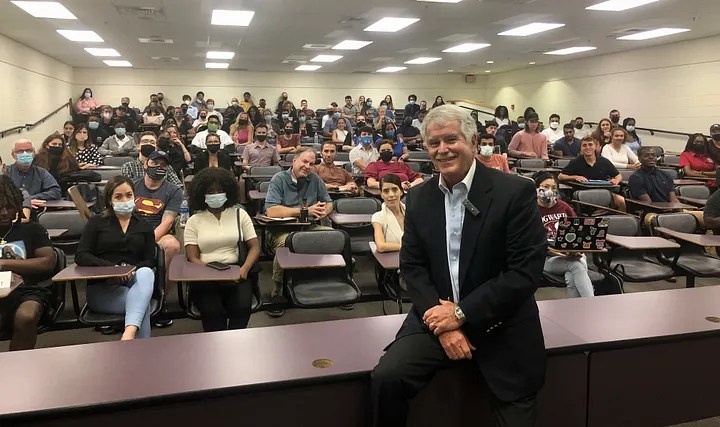
Here is a story about Boca Raton’s role in the history of technology.
The story traces its way from IBM’s large scale computer systems, to the personal computer, and finally to artificial intelligence and computer learning. The story begins by talking about the relation between art and technology, and how technological innovations can inspire artists. The story ends by talking about how technology relates to human health. How can doctors use artificial intelligence to help their patients achieve better health and improve the human condition?
It is a story about the history of buildings that now belong to the Boca Raton Innovation Campus (BRiC) in Florida, and the technology that has been developed and manufactured in those buildings. It is also a story about Pete Martinez, who has worked in Boca Raton for most of his life, focused on technology. Pete Martinez, and these buildings, have played a valuable role in the history of technology for the past 50 years.
The Buildings of BRiC: Art and Technology — A New Unity
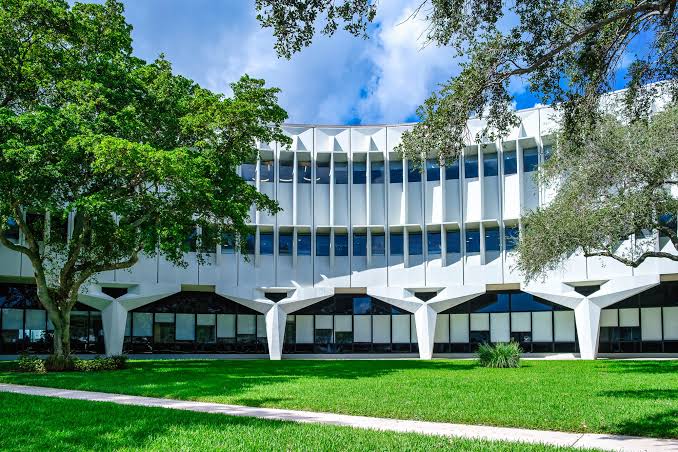
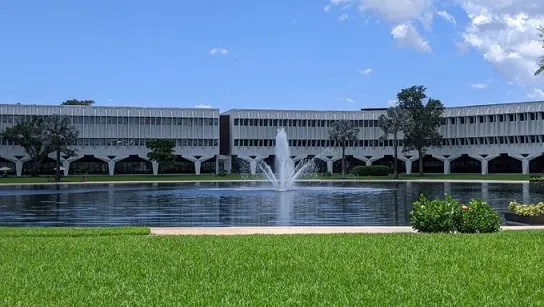
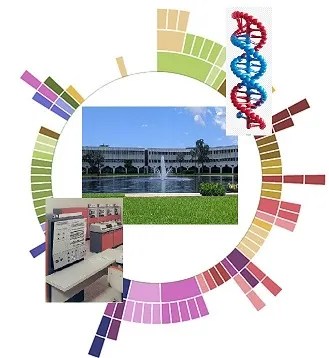
In the late 1960s, architects Marcel Breuer and Robert F. Gatje co-designed a set of buildings in Boca Raton, designed to be used by the IBM Corporation which was focused on the development of technology (Gatje, 2000, p. 216). These buildings, located off Yamato Road, are now part of the Boca Raton Innovation Campus.
Breuer considered his concrete buildings, like these, to be works of art. He thought of them like works of sculpture that people could experience not only from the outside but also from the inside (Breuer, 1963, p. 11). Breuer was fascinated by the relations between art, design, mass-production, and technology. Breuer also designed steel furniture, and their design was inspired by the way that many mass-produced technological products look. “Mass production and standardization had already made me interested in polished metal,” he writes, “in shiny and impeccable lines in space” (as cited in Papachristou 1970, p. 208). He designed his steel furniture to have “polished and curved lines” which he believed were “not only symbolic of our modern technology, but actually technology itself” (ibid.). Breuer had, himself, been taught by the famous architect Walter Gropius, who had advanced the slogan: “Art and Technology — A New Unity” (Bauhaus Archiv & Droste, 1998, p. 58).
It is fitting that Breuer co-designed buildings for the IBM Corporation, which eventually used those buildings to design and mass-produce its first line of personal computers. Likewise, Breuer designed the buildings so that their production could rely heavily on mass-production techniques that were novel for the time. Most of the concrete panels and beams used in its construction were precast off-site by three manufacturers that mass-produced them and delivered them to the construction site (Gatje, 200, p. 216).
IBM first used the buildings to manufacture large computing systems, including the IBM System/360 Model 20 (IBM Archives, n.d.). The central processing unit for the System/360 Model 20 was the size of a large filing cabinet and also required a separate card reader, printer, separate disk storage device, etc. Altogether, the system could fill a room.
By the early 1980s, IBM in Boca Raton had shifted focus to the development and mass-production of its first line of personal computers — vastly smaller and hugely successful for the company. The first IBM PC was released in 1981, and it is estimated that in 1982 around 200,000 units were sold, with perhaps double that sold the following year (Pollack, 1983).

Pete Martinez
Pete Martinez was born in Cuba and came to the United States with his family in 1961, when he was seven years old. He studied electrical engineering at the University of Miami, and moved to Boca Raton, to work for IBM, in 1975 (Boca Raton History Museum, 2017; Bootstrapping Your Dreams Show, 2023).
Martinez started working for IBM as a Junior Engineer, and began his career by designing memory for the IBM Series/1, a 16-bit computer introduced in 1976. The Series/1 represented an attempt by IBM to develop a smaller, less-expensive computer system. Its central processing unit was no longer the size of a large filing cabinet, but it was still much larger than a personal computer. It was shaped like a tower and about as tall as an adult man or woman — a bit like a refrigerator. At the time, though, it was considered small and inexpensive, at least in comparison with what came before, and it was called a “minicomputer.” The Series/1 also set the stage for the development of IBM’s first personal computer, not long after.
Pete Martinez was involved in the development of the IBM PC, which was released on August 12, 1981, and which was developed and manufactured in Boca Raton, Florida. It was developed with open architecture, that made adding components to it or upgrading it straightforward, and it was developed from off-the-shelf parts produced by other manufacturers, and relied on software and an operating system developed by other companies (Boca Raton History Museum, 2017).
One of Martinez’s jobs was managing the “systems assurance organization” — the test organization for the personal computer. Pete Martinez recalls that the IBM PC was developed — overall — in less than eighteen months. IBM needed to develop it quickly, in order to stay ahead of competitors and to develop a product that was still technologically relevant at the time of its release. Martinez recalls a constant debate with executives of the IBM corporation, who questioned how well components and software could be tested in such a short time (Boca Raton History Museum, 2017). In order to compete in the market, they needed to be fast. It was a technological revolution.
Pete Martinez worked in the buildings in Boca Raton that had been co-designed by Marcel Breuer. As noted, Breuer was an architect — a true artist — who was inspired by modern technology and mass-production. Meanwhile, Martinez and other IBM employees who worked in Breuer’s buildings played important roles in the development and mass-production of IBM’s first personal computer. Arguably, Breuer’s buildings have come, over time, to symbolize the unity of art and technology.
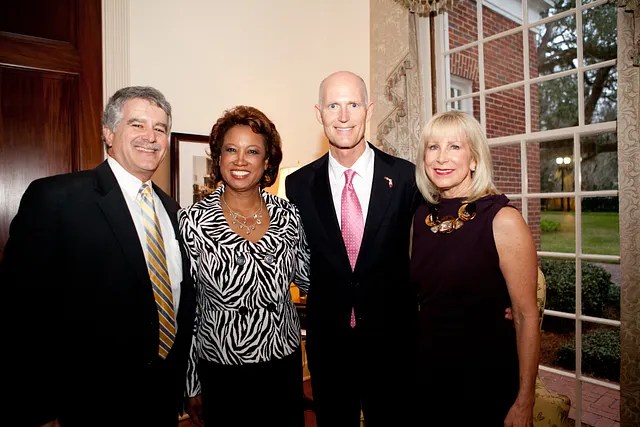
Sivotec at BRiC: Health and Technology – A New Unity
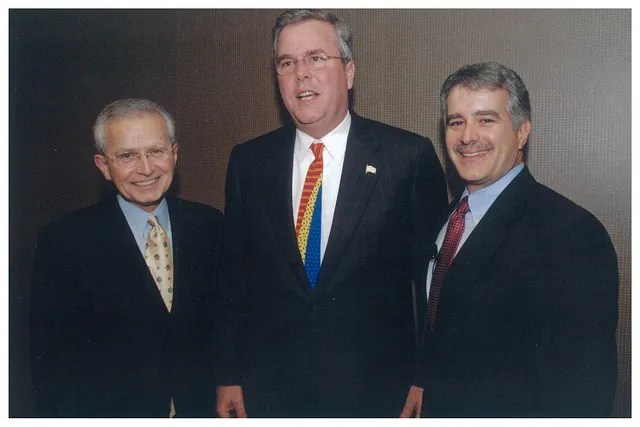
In the 1990s, IBM downsized, drastically reducing its presence in Boca Raton. Yet Pete Martinez remained with IBM, which had left the buildings that Marcel Breuer co-designed. Martinez worked for, and helped to organize, the IBM Consulting Group, which engaged in e-business consulting, communicating with clients about the Internet (Boca Raton History Museum, 2017; Different Brains, 2018; Bootstrapping Your Dreams Show, 2023).
Martinez led a project in which IBM partnered with the Scripps Research Institute. Together, IBM and the Research Institute developed Project Checkmate — an effort to protect against a possible epidemic of the H5NI influenza virus, otherwise known as “bird flu” (Ono, 2007). Project Checkmate used IBM’s BlueGene supercomputer to help predict how the virus might evolve and mutate over time (Bootstrapping Your Dreams Show, 2023; Ono, 2007). Ian Wilson, who was the lead scientist for Project Checkmate, spoke about the goal of the project: “If we could predict how a virus, such as H5N1, might evolve, we could have antibodies or vaccines ready, and be prepared for whatever move the virus might make” (Ono, 2007).
Martinez remarks that it was as if they were playing chess with the virus, trying to anticipate its moves and defeat it. Thus, Project Checkmate.
This project inspired Martinez. Just what could technology accomplish, to advance and promote human health? How could technology improve the human condition (Bootstrapping Your Dreams Show, 2023)? After thirty-two years working with IBM, Martinez left his job, and, not long after, created a new family of companies, the Sivotec family, dedicated to using computer technology to advance human health.
Decades after the revolution that was the personal computer, Pete Martinez was witnessing a new computer revolution — the disruptive technology that is Artificial Intelligence (AI). He — through Sivotec — is now part of this new world, using artificial intelligence to advance and improve human health.
Sivotec, Martinez says, stands for “Signatures in Vivo Through Technology” and it focuses on the “signatures of the living” (Different Brains, 2018). Each person has unique written signature — how we sign our names — but each of us also has a unique biological signature. Martinez says: “Think about your signature being your genomic profile, your biochemical profile, your cognitive profile.” In order to fully grasp an individual’s biological signature, it would also be necessary to consider their environment and their diet.
Suppose doctors gather data about a specific individual’s biological signature. Martinez hopes that the doctors might use an AI to help them make recommendations and prescriptions that are truly personalized to the individual. He hopes that AIs can be trained to take an individual’s biological signature into account, and search through massive databases that include information about different patients and their treatments and how they responded. Perhaps AIs can, after searching through these databases, help to predict what treatments and lifestyle changes might be optimal for the individual.
Suppose a person has a certain genetic profile, biochemical profile, cognitive profile, environment and diet. What should the person do to optimize their health? Also, what could we predict might happen for the person in the future, and how could that person and that person’s doctors be ready for it? It’s like playing chess with your biology. Checkmate: you’re healthy.
If artificial intelligence — a new form of computer technology — can contribute so substantially to promoting human health, then we will see a new unity of health and technology. Sivotec’s company name, itself, gives a sense of this unity. “Sivotec,” short for “Signatures in Vivo Through Technology,” includes the word “vivo,” which means life. Sivotec also includes the word “technology,” too. The unity of life and technology.
Martinez describes the main goal of Sivotec, which he says should also be the primary pursuit of everyone who works with the company. Its goal is to “improve the human condition” (Different Brains, 2018).
Sivotec is headquartered in the Boca Raton Innovation Campus. Pete Martinez has returned to the same buildings that IBM used to own in Boca Raton. Sivotec is located in the same campus of buildings, co-designed by Marcel Breuer, where the PC revolution took place. But now Martinez is the CEO of a new family of companies — Sivotec — and is part of a new endeavor in human technological history: artificial intelligence. The buildings of the Boca Raton Innovation Campus are once again being used for technological innovation.
Sivotec’s Research
In Sivotec Analytics, part of the Sivotec family, Pete Martinez teamed up with — among other people — Dr. Michael F. Bergeron, an expert in sports medicine and sports physiology (Different Brains, 2018). In 2020, Bergeron co-authored a paper in the Journal of Alzheimer’s Disease (Bergeron et al., 2020). The paper focused on how computer technology can assist with the early detection of mild cognitive impairment in patients, which may be a sign of even greater health problems in the future.
Bergeron and his co-authors were aware that there is a simple cognitive assessment test called MemTrax that individuals can use, on their own, online, without needing to meet with an expert or physician (Bergeron et al., 1546). It is also possible for individuals to meet with a trained researcher to take a test, called “MoCA,” to determine if the individual has normal cognitive health or mild cognitive impairment. This test is much more expensive, time consuming, and complicated.
Might a properly programmed and trained computer be able to predict, based on the results of an individual’s use of the online, self-assessment test, what the likely results of the trained researcher’s test would be?
Bergeron and his co-authors built predictive models on computers, and trained them using data from real patients who had completed both the online, self-assessment test and the test administered by the trained researcher (2020, 1150). The best of these models, once trained, were able to very frequently predict what the trained researcher’s test would conclude on the basis of the data from the online, self-administered test (2020, 1151–1153).
Imagine that you want to gain a sense of your own cognitive health, but have no good reason to pursue a costly, time-consuming and complicated meeting with a trained researcher. Now, you can take a simple, self-administered test and — with the help of predictive models trained with machine learning on computers — get a reasonable sense of what the outcome of a researcher’s test would likely be. If the predicted result is not favorable, then you can look further and communicate with doctors and researchers. In other words, machine learning can help with the early detection of changes in cognitive health, which could contribute both to “personal health management and public health alike” (Bergeron et al., 2020, 1552).
Sivotec’s Research, Continued
In Sivotec Bionformatics, another member of the Sivotec family, Pete Martinez teamed up with — among other people — Dr. Klaas Wierenga and Dr. Nicholas Tsinoremas (Sivotec Bioinformatics, 2020B). In 2013, Wierenga and Tsinoremas co-authored a paper in the journal Genetics in Medicine (Wierenga et al., 2013). The paper describes an online tool that its authors designed which can help doctors diagnose some disorders on the basis of DNA tests (Weirenga et al., 2013).
Imagine an individual has recently completed a DNA test — a genetics test. Now, a skilled geneticist must spend numerous hours, querying genetic databases, in order to determine what disorders are likely on the basis of the test (Wierenga et al., 2013). This is a costly process and, based on the time that is required, evaluations by geneticists are, by necessity, limited to only a small portion of the population. There is also a risk that the geneticist might overlook possible candidate disorders, especially if they are rare.
Klaas Wierenga, Nicholas Tsinoremas, and their collaborators created an online tool, that can be used simultaneously on many different computers, that can assist geneticists with this process. The online tool systematically searches through genetics databases, and generates a short list of possible, candidate disorders that might be relevant (Wierenga et al., 2013). A trained geneticist can then evaluate whether or not those candidate disorders are possible or likely and can also, reflecting on the list, perform additional queries of genetic databases to make even better assessments.
Ideally, tools like this will dramatically speed up the time required by geneticists to provide accurate evaluations and reduce the cost of these evaluations. If so, tools like this might also help make evaluations like this available to a larger population (Crunchbase, n.d.). Perhaps, too, they could help geneticists avoid overlooking rare disorders.
Sivotec Bioinformatics is now working on providing a new Artificial-Intelligence based platform to genetics, called “GENA,” which is designed to: “shorten genetic analysis process, improve diagnosis time and make genetics more accessible to patients everywhere” (Sivotec Bioinformatics, 2020A). The researchers involved with Sivotec are building on their research focusing on online tools. They are using what they learned to develop a powerful platform that can help with diagnoses and human health.

The Boca Raton Innovation Campus: Art, Technology, and Human Health
What is similar about both IBM’s work on its first personal computer and Sivotec’s work using artificial intelligence to advance human health? Both focus on computer technology and both are revolutionary for their time. But more specifically, Pete Martinez has contributed to both, and has done so working in the buildings co-designed by Marcel Breuer that now belong to the Boca Raton Innovation Campus (BRiC).
The technology, now, is radically different from what it was back then. Technology has improved in the last forty years. But technological innovations are still occurring in the same buildings in Boca Raton, and Pete Martinez, who was in Boca then, is still working on major technological innovations now.
As noted, the buildings of BRiC represent the unity of art and technology. Their architect, Marcel Breuer, was inspired by technology, designed them to be constructed using mass-production techniques, and designed them for the IBM corporation, which used them to develop large-scale computer systems and mass-produce its first personal computers.
Now, Pete Martinez, in these buildings, has sought to unite human health and technology in novel ways, using artificial intelligence and machine learning to advance human health and improve the human condition. Boca Raton, and the buildings of BRiC in particular, have been a place where technology expanded and fused with some of what makes us human — the health of our bodies and the art we create.
FINISHED
***
I am the author of the book Theater to Change the World: Shia LaBeouf and the Slauson Rec Company. The book is available on Amazon here.

References
Bauhaus Archiv & Droste, M. (1998). Bauhaus: 1919–1933. Benedict Taschen.
Bergeron, M.F., Landset, S., Zhou, X., Ding, T., Khoshgoftaar, F.Z., Zhao, F., Du, B., Chen, X., Wang, X., Zohong, L., Liu, X., & Ashford, J.W. (2020). Utility of MemTrax and machine learning modeling in classification of mild cognitive impairment. Journal of Alzheimer’s Disease 77: 1545–1558.
Boca Raton History Museum [BocaHistory]. (2017, Nomber 30). IBM Oral History Project: Pete Martinez Interview [YouTube Video]. http://www.youtube.com/watch?v=n7xi-YdwySg
Bootstrapping Your Dreams Show [slidenerd]. (2023, December 4). From IBM to AI Frontier: A Tech Visionary’s Bold Odyssey [YouTube Video]. https://www.youtube.com/watch?v=foGoF988dwQ
Breuer, M. (1963). [Typescript of lecture: Matter and intrinsic form. University of Michigan, Ann Abor, MI, United States.] Marcel Breuer papers, 1920–1986, Archives of American Art, Smithsonian Institution. https://www.aaa.si.edu/ collections/marcel-breuer-papers-5596/
Crunchbase. (n.d.). Gena. https://www.crunchbase.com/organization/sivotec
Different Brains [DifferentBrains]. (2018, August 2). The next generation of concussion research, with SIVOTEC Analytics’ Pete Martinez | EBD 137 [YouTube Video]. https://www.youtube.com/watch?v=PvPQvQgkMjg
Gatje, R.F. (2000). Marcel Breuer: A Memoir. The Monacelli Press.
Ono, M. (2007, April 23). Playing to win: An interview with Ian Wilson on Project Checkmate. News & Views: Online Weekly of the Scripps Research Institute, 7(13): https://www.scripps.edu/newsandviews/e_20070423/checkmate.html
Papachristou, T. (1970). Marcel Breuer: New Buildings and Projects 1960–1970 and Work in Retrospect 1921–1960. Thames and Hudson.
Pollack, A. (1983, March 27). Big I.B.M. has done it again. New York Times. https://www.nytimes.com/1983/03/27/business/big-ibm-has-done-it-again.html
Sivotec Bioinformatics. (2020A). Sivotec Bioinformatics. https://www.sivotecbioinformatics.com/
Sivotec Bioinformatics. (2020B). Executive leadership team. https://www.sivotecbioinformatics.com/our-team
Wierenga, K.J., Jiang, Z., Yang, A.C., Mulvihill, J.J., & Tsinoremas, N.F. (2013). A clinical evaluation tool for SNP arrays, especially for autosomal recessive conditions in offspring of consanguineous parents. Genetics in Medicine 15(5): 354–360. https://www.ncbi.nlm.nih.gov/pmc/articles/PMC3908554/

