*******
What kind of power does live theatre have?
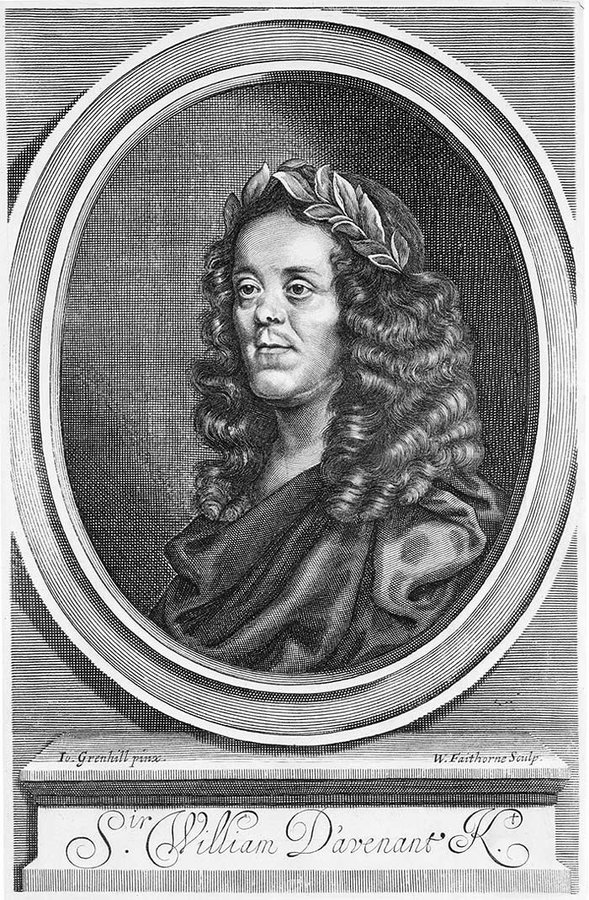
In 1653, William Davenant – poet and playwright – published his piece “A Proposition for the Advancement of Moralitie” (Jacob & Raylor, 2013, p. 205). In it, he argues that watching live theatre can help audiences to become more virtuous. Davenant imagined, in particular, theatrical productions that included characters, plot, music, moveable scenery, spoken discourse, and lights (ibid., pp. 205 & 209). He thought that productions like this could help audiences to become more virtuous by encouraging them to imitate the virtuous characters they saw portrayed on stage (pp. 223 & 226). Audiences would admire the virtuous characters they saw, and would – after leaving the theatre – feel inspired to live more like those characters do.
This is the power of theatre. It can help make us moral.
But why might theater have a bigger impact on us than reading a novel?
Davenant maintained that “the generality of mankinde are solely instructed by their senses” (1654, p. 244). Live theatre could have a substantial effect on audiences because of the extent to which it could impact the senses. Audiences’ “eyes might be subdu’d with Heroicall Pictures and change of Scenes, their Eares civiliz’d with Musick and wholesome discourses” (ibid., p. 245). Davenant wanted to create theatrical productions with mechanically moveable set pieces, costumed characters, and moving lights. He thought that theater could have a particularly powerful impact on people, and on their morality, because of the extent to which it appealed to their senses.
***
Above I have quoted from Davenant’s 1654 piece, “A Proposition for Advancement of Moralitie,” and I also cited James R. Jacob & Timothy Raylor’s (1991) work, “Opera and Obedience: Thomas Hobbes and A Proposition for Advancement of Moralitie by Sir William Davenant.”

